
Feline Leukemia Virus (FeLV) is one of the most significant viral diseases affecting domestic cats. This retrovirus severely compromises a cat’s immune system, leading to a higher susceptibility to other infections and life-threatening conditions such as cancer. Early detection of the FeLV antigen in a cat’s blood is critical for managing and mitigating the disease, especially in environments like shelters or multi-cat households (NCBI, Cornell Vet, Merck Vet Manual).
Understanding FeLV: Transmission and Symptoms
FeLV is primarily transmitted between cats through prolonged close contact, most commonly through saliva, nasal secretions, and, less frequently, through urine or feces (CDC, AVMA). The virus does not persist long in the environment, making direct transmission via grooming, sharing food or water dishes, and bites more common than indirect routes (Vet Med Illinois).
Once infected, cats can exhibit a range of symptoms including persistent fever, weight loss, lethargy, and anemia, as the virus often attacks the bone marrow, leading to reduced red and white blood cell production (PubMed). However, some cats may remain asymptomatic for months or even years, making early testing crucial in preventing the spread of the virus (NIH).
The progression of FeLV can be categorized into three stages:
- Abortive infection: The immune system clears the virus before it can establish in the body.
- Regressive infection: The virus remains in the body but at low levels, not causing illness.
- Progressive infection: The virus actively replicates in the bloodstream and organs, leading to symptoms and contagiousness (VetMed UC Davis, FDA).

FeLV Antigen Testing: A Key to Early Diagnosis
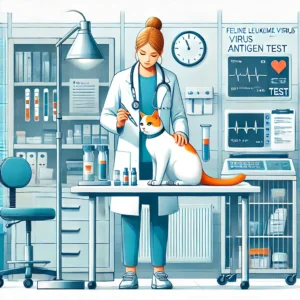
FeLV antigen testing is crucial for the timely detection of the virus. Testing can reveal the presence of the FeLV p27 antigen, a protein associated with the virus, in the cat’s bloodstream. The two primary diagnostic tools are:
- ELISA Test: This enzyme-linked immunosorbent assay is widely used because of its ability to detect the virus early, even during the initial stages of infection. It identifies soluble FeLV antigens in the blood (Vet K-State, FDA Animal Veterinary).
- IFA Test: The immunofluorescence assay is generally used to confirm positive results from the ELISA test. This test detects FeLV in the blood cells, typically in later stages of infection, indicating a progressive and likely permanent infection (AVMA, NIAID).
Both tests play an essential role in screening cats, particularly in high-risk environments like shelters or multi-cat households (CDC Healthy Pets).
Preventing FeLV Spread: Vaccination and Testing
The prevention of FeLV is crucial, especially in multi-cat environments. Vaccination is recommended for cats at risk of exposure. However, it is not 100% effective, especially if the cat has already been exposed to the virus. Regular antigen testing is, therefore, vital for early detection and intervention (Cornell Vet, VetMed UF).
It is recommended to test new cats before introducing them to a household with other felines, as asymptomatic carriers can still spread the virus (NIH Research). In addition to testing, maintaining good hygiene practices in shelters and clinics, such as cleaning food and water dishes, litter boxes, and bedding, can minimize the spread of the virus (CDC Healthy Water).
Managing FeLV-Positive Cats
While there is no cure for FeLV, early diagnosis allows for better management of the disease. Cats with FeLV should receive routine veterinary care to monitor for secondary infections and other FeLV-related conditions, such as lymphoma or anemia (VetMed Auburn, FDA). Supportive treatments like antiviral medications, immune boosters, and nutritional support can improve the quality of life for FeLV-positive cats (NIH NIAID).
It is also essential to keep FeLV-positive cats indoors to prevent the spread of the virus to other cats in the neighborhood. Moreover, good nutrition and a low-stress environment are important in extending the lifespan and improving the well-being of FeLV-positive cats (USDA APHIS).
Ongoing Research and Future Outlook
Current research into FeLV aims to develop more effective vaccines and treatments, as well as improved diagnostic tests. Veterinary scientists are exploring ways to enhance the immune response to FeLV and to prevent its progression in infected cats. The use of gene therapy and antiviral drugs holds potential for future therapeutic breakthroughs (VetMed Ohio State, WSU Vet).
Additionally, efforts are being made to educate cat owners and veterinarians on the importance of regular testing and vaccination protocols, particularly in areas with high FeLV prevalence. As understanding of the virus advances, so too does the hope for longer, healthier lives for FeLV-positive cats (VetMed UF).